Nynas tests new method for carbon dioxide storage in Nynäshamn
Nynas is participating in a pilot project to evaluate a new method for permanent carbon dioxide storage linked to hydrogen production at its Nynäshamn site. The project is carried out in collaboration with the Swedish technology company Cestore and researchers at KTH Royal Institute of Technology.
The aim is to assess whether the technology can become a long-term, scalable and cost-efficient solution for carbon dioxide storage in industrial applications.
Technology inspired by natural ocean processes
The method being tested is based on chemical processes that occur naturally in the ocean. Carbon dioxide is dissolved in water and reacts with alkaline materials, binding the carbon into stable, water-soluble salts. Unlike conventional Carbon Capture and Storage (CCS), where carbon dioxide is liquefied and stored deep underground or beneath the seabed, this approach relies on chemical conversion rather than geological storage.
The technology also includes an electrochemical cell capable of generating electricity from the process. The ambition is to use this energy to power parts of the system, potentially reducing overall energy consumption.
Nynas’ role in the pilot project
Nynas is involved to explore how the technology could be applied within its own operations. As part of the pilot, the conditions for storing approximately 5,000 tonnes of carbon dioxide per year from hydrogen production in Nynäshamn are being evaluated.
“What made the solution interesting for Nynas is its relatively simple design and its potential to be more cost-efficient than some established CCS solutions,” says Peter Eriksson, Engineering Manager at Nynas.
The work also includes assessing regulatory and permitting requirements, as well as how carbon dioxide capture and storage could be integrated into existing processes.
Next steps
During spring and summer, testing will be scaled up from laboratory level to a larger pilot installation. In parallel, containerised testing is being planned, which could enable evaluations closer to industrial facilities.
For Nynas, the project is part of the ongoing effort to systematically assess new technologies that can help reduce climate impact and support long-term sustainability.
“Cestore’s ocean-based carbon removal aligns with Nynas’ sustainability goals by offering a scalable solution with limited infrastructure requirements, enabling reduced industrial CO₂ emissions without disrupting core refining processes,” says Praveen Patel, Portfolio Manager at Nynas.
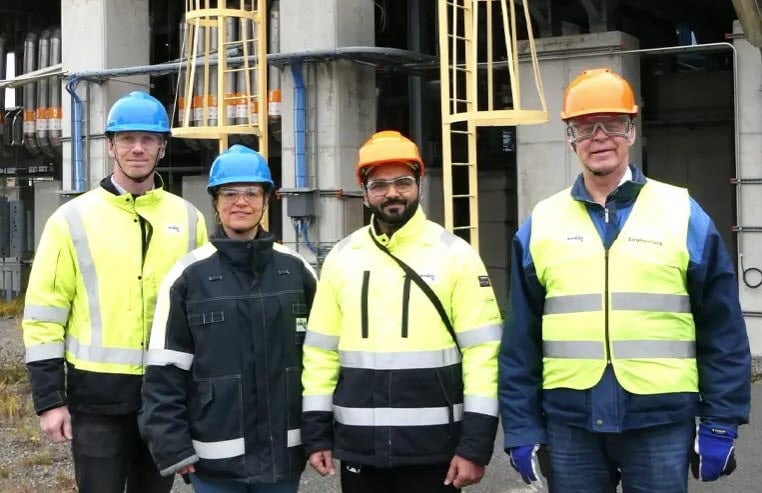
Photo caption: From left to right: Johan Levander, CTO Cestore; Johanna Hultén, CEO Cestore; Praveen Patel, Portfolio Manager Nynas; Peter Eriksson, Engineering Manager Nynas.