Premium replacement
Bridging the gap between traditional naphthenic oils and highly refined white oils, NYNAS® S 90 is a base oil offering premium performance advantages for example when used in semi-synthetic grease formulations. It is also available in an EVO version with a lower carbon footprint.

Mehdi Fathi-Najafi
Independent Senior Advisor and former Chief Specialist at Nynas AB.
“As a multifunctional naphthenic oil, NYNAS S 90 lends itself for use in semi-synthetic or high-performance lubrication and grease products. This severely hydrotreated naphthenic base oil has been shown to significantly boost the performance of such formulations,” says Nynas’ senior advisor Mehdi Fathi-Najafi.
Among its merits, S 90 can boast more balanced solvency, outstanding low-temperature performance, low odour and colour, excellent oxidation stability and FDA §178.3620 (c) compliance. The combination of these properties makes it an ideal base oil choice for products such as high-performance non-direct food use greases, industrial oils, and specialty lubricant applications where both solvency and cleanliness are critical.
“Various studies show that S 90 performs very well not only as a single base oil, but also in blended formulations where it can act as part replacement of some synthetic oils, preferably PAO (poly-alpha olefin),” says Mehdi Fathi-Najafi.
Further investigations have shown that S 90 also functions as a great booster in blends with paraffinic Group II (Gr II) and paraffinic Group III (Gr III) oils for use in highly demanding applications such as in low-temperature hydraulic formulations, and in compressor oils. Or in the case of gear oils (with extended low-temperature performance) in which viscosity improver was also incorporated.
Table 1. Some characteristics of the base oil blends (Blend 1, 2 and 3 respectively).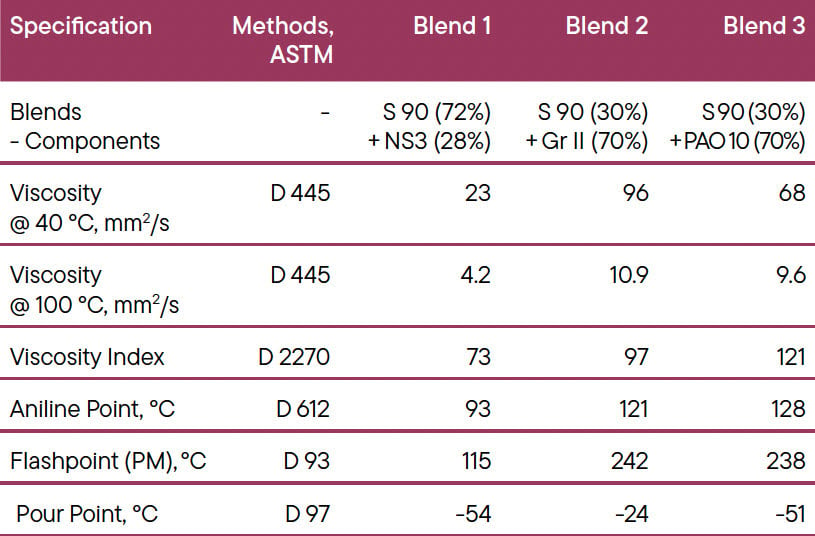
Table 2. Some measured characteristics of the Base oil blend (Blend A).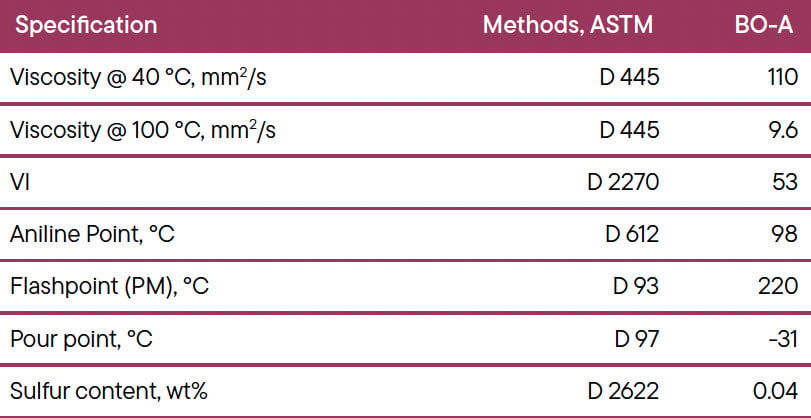
Table 3. Measured characteristics of the Polyurea Grease (Grease A) based on BO-A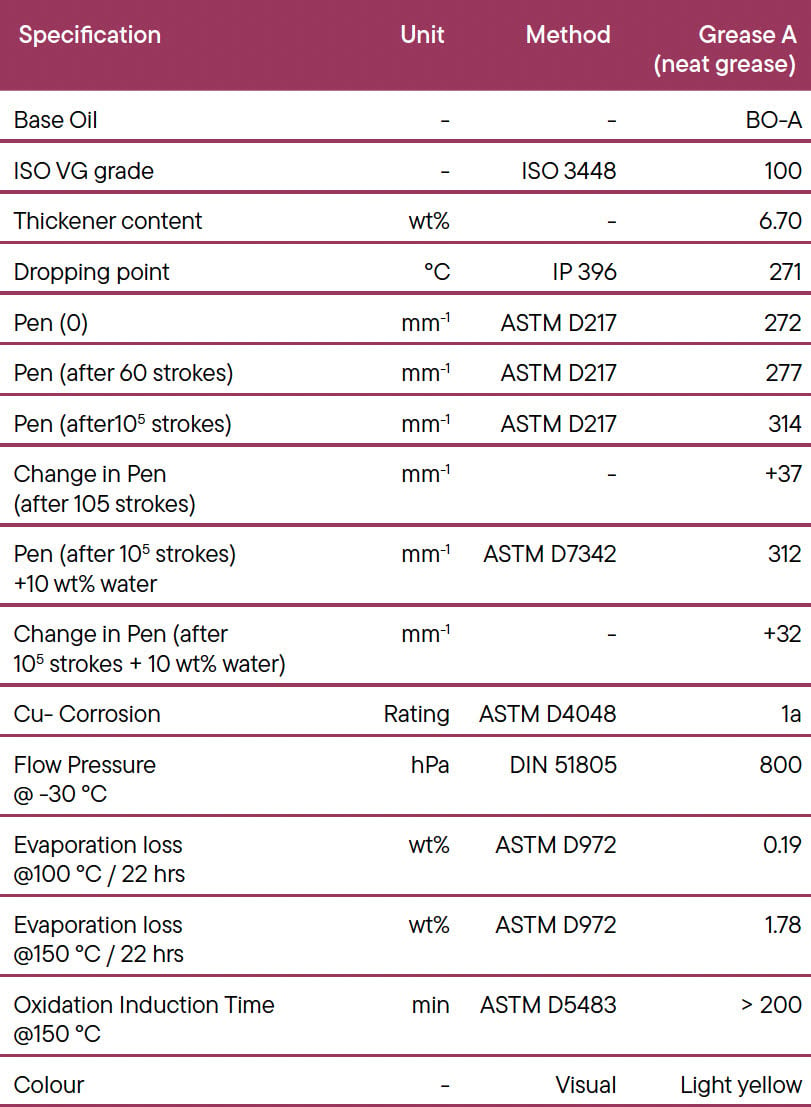
Table 4. Some characteristics of the Blend of S 90 and PAO 10 (BO -B) used in the formulation of LiX.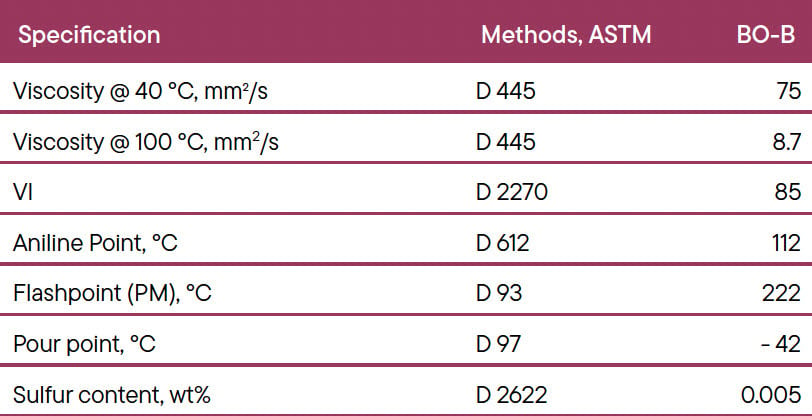
Figure 1. Friction Coefficient versus Time for the Base oil and the two polyurea greases.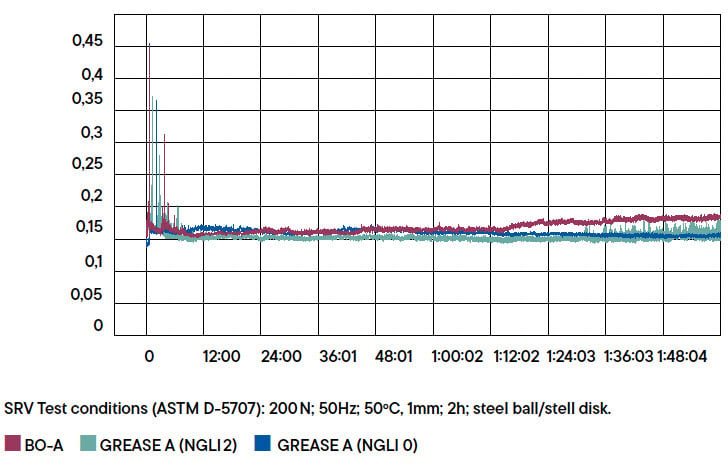
Figure 2. Oxidative behaviour of the LiX grease with and without antioxidant.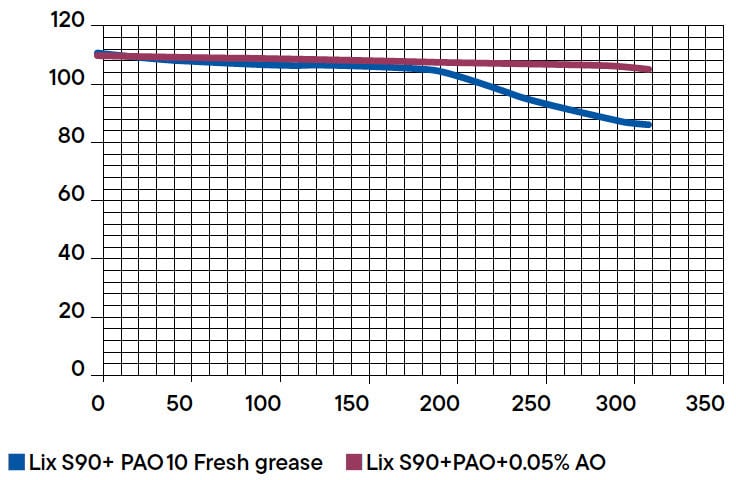
“So, in order to widen the potential, we prepared some blends, which can function as models,” explains Mehdi Fathi-Najafi.
“The results gained from these laboratory investigations as well as those reported from industrial scale case studies emphasise that NYNAS S 90 is indeed a high performance, multifunctional oil,” he says.
Success in lubricationg grease
As a premium colourless and odour-free severely hydrotreated naphthenic base oil, S 90 is suitable for use in high-value and high-performance grease formulations such as polyurea grease and lithium complex grease.
Briefly highlighted below are two case studies:
CASE 1; a polyurea grease which was formulated based on a blend of S 90 and Nynas T grades in a ratio of 3 to 1 (BO-A). The grease was made in accordance with the well-established polyurea grease technology, whereby a controlled chemical reaction between an alkylamine and methylene di-isocyanate is allowed to take place in situ in the base oils.
In addition to the measurements described in Table 3, the frictional behaviour of two different consistencies (NLGI 0 and NLGI 2) of the polyurea grease along with the base oil blend (BO-A) were determined using an SRV machine (ASTM D 5707). Note that the grease models did not contain any additives. It has to be underlined that the low level of the friction of coefficient, Figure 1, can be significantly reduced. For example, when 0.5 wt% of an anti-wear (ZnDTP) was added to Grease A (NLGI 2), the wear scar of the ball was reduced by 40% and the mean friction coefficient by 15%.
CASE 2; a lithium complex grease (LiX) based on a blend of S 90 and PAO 10 (BO-B). The LiX grease was formulated based on a combination of S 90 and PAO 10 in a ratio of about 3.6 to 1, targeting a viscosity of 75 mm2/s at 40 °C. Some characteristics of this blend are described in Table 4.
Beside several great performance data such as high dropping point (> 280 °C), good shear stability, excellent low temperature flowability, the response of antioxidant in this grease was outstanding.
The response of the antioxidant was investigated by employing ASTM D942: The Oxygen Pressure Vessel Method (OPVM).
The results are shown in Figure 2, where the fresh grease (neat grease) is marked in brown and the neat grease + 0.05 wt% antioxidant is marked in blue.
Figure 2 demonstrates the impressive response of antioxidant in the LiX (based on BO-B). Note that the test was stopped after exceeding 300 hours.
“In summary, despite the findings so far, I firmly believe that the full potential of S 90 has yet to be revealed,” concludes Mehdi Fathi-Najafi.


